Pawpaw: North America’s Tropical Fruit Treasure
(Asimina triloba)
Pawpaw, sometimes called the “poor man’s banana,” is a unique native fruit tree that brings a touch of the tropics to temperate North American landscapes. This understory tree offers delicious fruit, ornamental value, and ecological benefits.
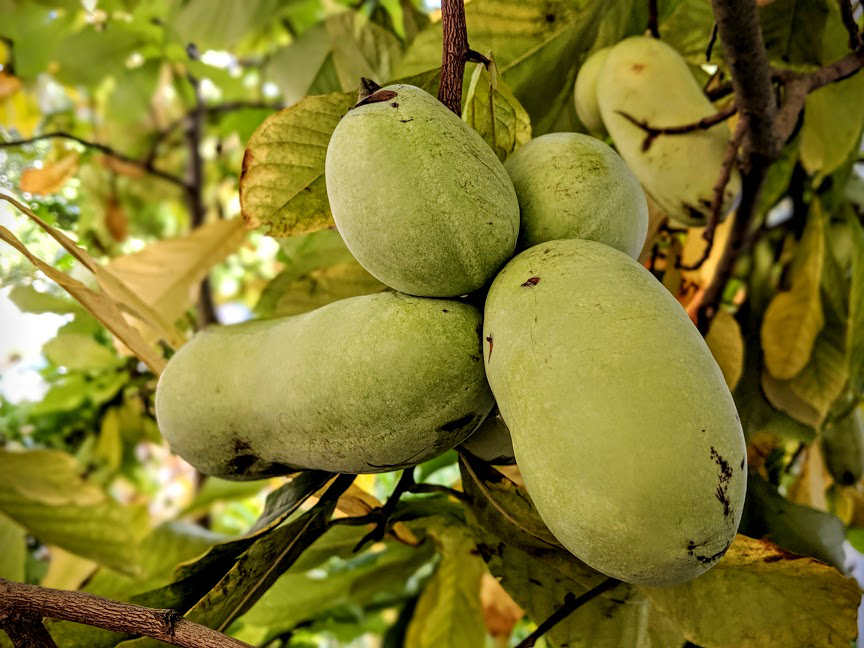
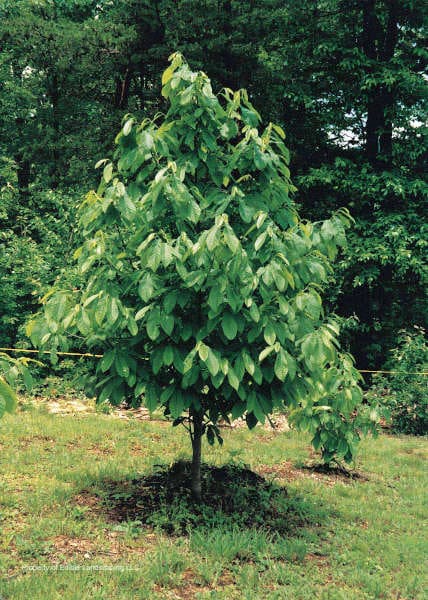
Growing 15-20 feet tall, pawpaw trees have large, oblong leaves that turn golden yellow in fall, creating a lush, tropical appearance. In spring, they produce intriguing maroon flowers, followed by large, oblong fruits that ripen in late summer to early fall. The creamy flesh of pawpaw fruit has a custard-like texture and a flavor often described as a blend of banana, mango, and pineapple.
Pawpaws are the largest edible fruit native to North America and were an important food for many indigenous peoples. They’re rich in vitamins, minerals, and antioxidants. The trees also serve as the sole host plant for the zebra swallowtail butterfly, making them valuable for supporting biodiversity.
These trees like a bit of partial shade when they’re young, and then full sun for full fruit production after their first couple years. They like rich, well-drained soil. They’re hardy in USDA zones 5-9 and are relatively pest and disease resistant. Pawpaws typically require cross-pollination from a genetically different tree for fruit production.
At Humble Abode Nursery, we offer bare-root pawpaw tree seedlings from cultivars known for fruit quality and productivity. Our trees are grown using sustainable practices to ensure healthy, vigorous specimens.
Consider adding pawpaws to your garden if you’re interested in unique native fruits, want to create a forest garden, or are looking to support local ecosystems. Their tropical appearance, delicious fruit, and historical significance make them a fascinating addition to any diverse landscape.
Additional Growing Notes:
—Seedling paw paws need shade for the first couple years of life. Grafted paw paws do not have this issue. You can wrap a shade cloth around a cage or use other plants to shade it. Then as it gets older it will want more light to produce more fruit.
—You can plant them a little closer together than you might plant other fruit trees. They seem to enjoy the company.