
When you propagate plants, you get the feeling of creating something valuable out of nothing. Of course it’s not actually nothing—you’ve got the genetic make-up of the plant that’s been refined over millennia, and then you’ve got the sun, soil, water, and time, all of which are produced by in abundance by nature. So while it’s not nothing, you don’t need to buy anything to make more plants, which is pretty darn cool, if you ask me. But you do have to know what you’re doing to make nature work for you, so hopefully the info here will help.
Part 1: Infrastructure—Some things you might want to have around when propagating plants
Part 2: Methods—Hardwood cuttings, softwood cuttings, seeds, layering, grafting
Part 3: Plant tips —Some brief tips regarding specific species
Part 1: Infrastructure
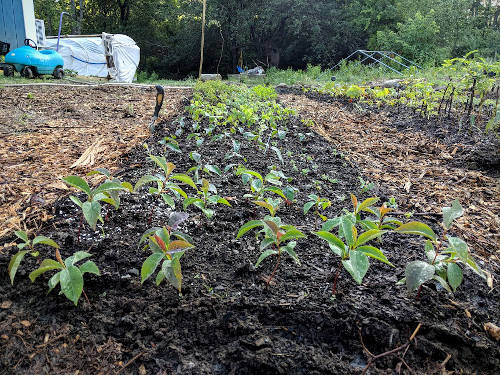
Nursery bed: The nursery bed is an area of your garden dedicated specifically to raising young plants. Baby plants grown from seeds and cuttings need extra coddling if you want to have a high success rate with them. The conditions in your nursery bed should be as good as you can possibly make them—deep, well-drained, loose soil full of organic matter, well mulched and free of weeds, good sunlight, protected from wind—you’ve heard this before, right? Creating optimum conditions for plant growth is the name of the game. You may be thinking “nature doesn’t need a nursery bed to make millions of trees, so why should I use one? Why can’t I just scatter seed around and stick cuttings where I want plants to grow?” I’ve tried it, and you should too. You’ll soon understand that it’s just not practical. Trying to keep track of tiny plants growing all over your land is really difficult. Not to mention keeping all those areas free of weeds, watered, etc. Remember that a tree will disperse hundreds of thousands or even millions of seeds to produce a single mature offspring. We don’t have that luxury as humans. So embrace the nursery bed, where you can care for many plants in a small space. After one or two years of growing, dormant plants should be moved to their final destination. After two years plants growing closely together become much more difficult to efficiently transplant.
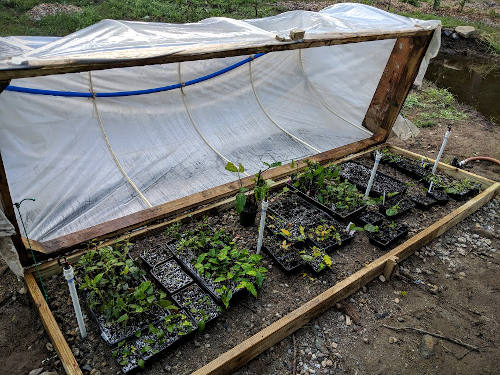
Misting bed: The misting bed is an area dedicated to propagating softwood cuttings that utilizes intermittent misting. The mist comes on for a few seconds every ten minutes or so and keeps the cuttings alive until they send out roots. Misting allows you to propagate many more species of plants with a greater success rate. One challenge with it is getting the plants to put on sufficient growth and harden off in order to survive the winter, since the growing season is much shorter, having taken the cuttings in June at the earliest. The advice I usually hear for beginners is to start by making a small humidity dome over a pot and keep spraying the cuttings with a spray bottle. Inevitably a person does not sit around with the spray bottle all day and the results are usually less than ideal. If you’re serious about plant propagation, it’s well worth the investment to get a timer that’s programmable in seconds that automatically sends out mist for you.
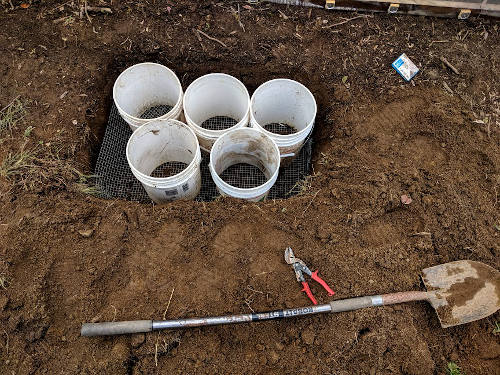
Air pruning bed: The air pruning bed is for growing taprooted species. Many nut trees send out crazy long taproots that make them difficult to transplant. So instead they can be planted in a container raised so that there is air between the bottom of the container and the ground. The container’s bottom is made with hardware cloth, which exposes the bottom of the soil in the container to the air. When the roots hit the bottom of the container they hit the air, stop growing and branch out to become more fibrous. The air prune bed is a low-cost way to propagate trees. It’s really easy to get the trees out with their entire root system at the end of the season. You can make them quite large permanent structures or small boxes that you can pick up.
Stock plant: A stock plant is a parent plant that you can take cuttings or seeds from, year after year. You can plant them on your land, or you can find them already growing in the wild, in public landscapes, or in other people’s gardens. It’s a great way to meet people who are interested in these plants also.
Stratification location: The seeds of many perennial plants need a cold moist stratification in order to break dormancy and germinate. It’s a built in mechanism the plant has to prevent it from germinating its seeds too early, for example if there is a couple days of warm weather during the winter. You can sow seeds that need stratification in the fall and let the winter weather do the work for you. But there are other options that have benefits as well. You can bury the seeds in layers (this is where the word stratification comes from) with sand in a box. There are many variations on this—you could use plastic pots instead of a box, or compost instead of sand. The benefit of this method is that you can protect certain delicious seeds, like chestnuts or hazelnuts, from squirrels and other animals. You also may not be ready to sow seed in fall. Seeds can also be heaved up by frost over winter.
Another method is to keep the seeds in plastic bags in a refrigerator. This works really well, I’ve got a separate fridge for doing this which I keep just a little above freezing. You have to check periodically for mold. Use less water than you think, if you can squeeze drops of water out it’s way too much— the seeds will rot much easier. Just slightly moist. Coco peat works well for me as a medium to keep the seeds moist—you could use sand, peat, compost, etc. and they’d all probably work fine for you.
Part 3: Specific Plant Tips
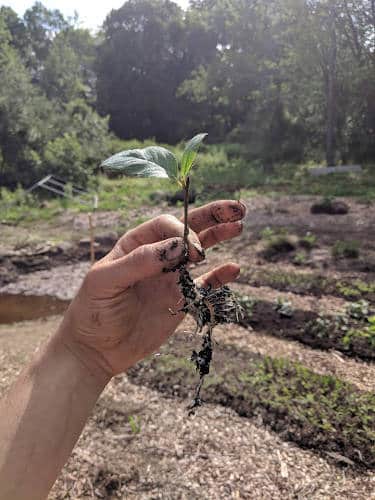
Apples: Apples are generally propagated by grafting, since they don’t root easily but cuttings, don’t come true from seeds, and because rootstocks are used to impart beneficial qualities such as hardiness, disease-resistance, and dwarfing.
Apple rootstocks, which are difficult to root by cuttings, are often propagated by stool layering. You let the rootstock grow for a season, then cut it back and mound the soil around the new shoots that grow. It’s a multi-year process, but once you do it the same stool is able to produce plants for decades. Additionally, you can use seed for apple rootstock. Wild apples grow everywhere around where I live. Save the seeds and plant them in a nursery bed. If there are cideries where you live, or if you make cider, you can take some mash and put it under some mulch in the fall. In the spring you will have many apples shooting up which can later be grafted onto, if you wish.
Aronia: A high percentage of these root as softwood cuttings under mist. They’re pretty easy as they grow vigorously and overwinter well when grown from softwood cuttings.
Blackberries: Tip layering is easy. Softwood cuttings are easy also.
Chestnuts: Keep seeds protected from rodents over the winter. I stratify them using the bucket method. Then I sow them in spring in an air prune bed.
Comfrey: Another super easy one. Once you’ve got some comfrey there’s no need to buy any more. Each fragment of root planted in early spring will become it’s own plant. Some roots with some growing points on top will produce a stronger plant faster.
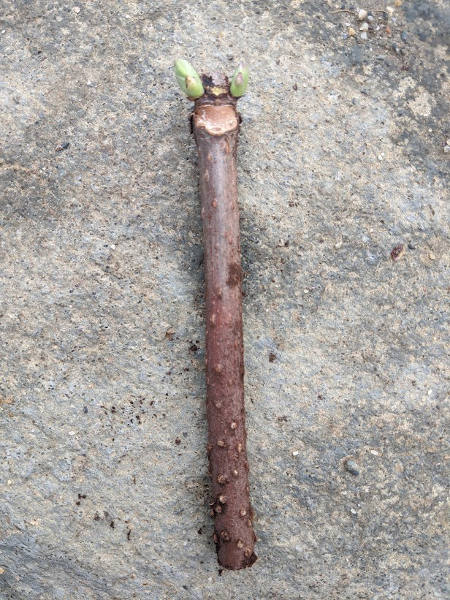
Elderberries: All the varieties of elderberries we sell root very readily from hardwood cuttings. At any time the plants are dormant and the ground is not frozen, take cuttings and stick them in your nursery bed. The cuttings should be from last year’s growth. Once an elderberry stock plant is well-established, you can coppice it every year and get many cuttings every year. Some other plants need nodes underground to root, but not elderberries. Just make sure there is one set of buds above ground, and roots will emerge from the inter-nodal space (see image below). You don’t need any rooting hormone. Make sure they are oriented in the correct direction (buds pointing up). Push them down so at least half the cutting is underground. In the spring, the cuttings should leaf out and begin to grow. At the end of the season, you can dig them up when they’re dormant, admire the amount of roots they’ve grown and then transplant them out to where you want them. They also grow well from softwood cuttings.
Goji: Goji propagates easily by hardwood cuttings or softwood cuttings. Additionally, it is also very easy to propagate goji by tip layering. In fact, the gojis will probably tip layer themselves for you over time. Tip layering just means you bend and bury the tip of an actively growing shoot in the soil. You can use a rock to cover it and make sure it stays down. Once roots form you can sever the stem, dig up the new roots and transplant.
Gooseberries: Tip layering works very well. Softwood cuttings do not seem to work well for me.
Goumi Berry: roots but roots slowly from softwood cuttings, so you’ll still have a tiny plant by the end of the season. It’s relatively easy to layer, since it naturally has a multi-stemmed form, you can just pile up soil at its base.
Hazelnuts: Treat these in much the same way you would chestnuts—protect them during winter stratification and as the plants are being established in the spring. Some seeds have some kind of chemical that induces dormancy that can be leached out in water. Hazelnut seems to be one of these. I always soak hazelnut seeds for at least a few days prior to stratification, changing the water once a day. If you want to clone a hazelnut, you can bend a stem down and layer it.
Hardy Kiwi: These root easily from softwood cuttings and hardwood cuttings. You don’t need to use rooting hormone. It can be hard to get them to harden off sufficiently in my short growing season and can benefit from some extra protection overwinter, and often times they’ll still die back and resprout after their first year. Hardy kiwis are also easily layered. Lay the vine down on the ground, and mound up soil or sawdust at the base of where the vertical shoots grow up.
Honeyberry: 1’+ plants can be produced from softwood cuttings taken in early June. Also very easy to layer, just by mounding soil at the base of an established plant.
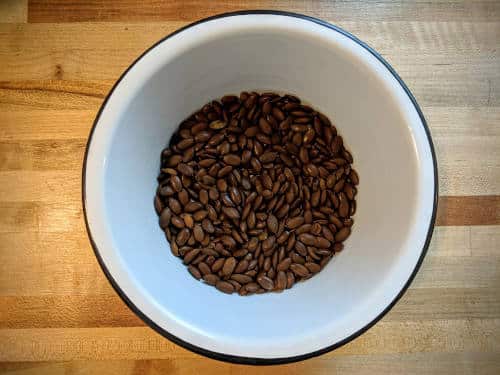
Honey Locust: has large seeds, which have energy stored in them, so they’re vigorous right from the start, which makes things easier. These seeds have an incredibly hard seed coat, which keeps them dormant. They do not require cold stratification. Give them a hot water treatment before you plant them in order to break dormancy. Very easy: boil some water, maybe 1-2x the volume of your seed, wait maybe 30 seconds for it to cool a little, and then dump your seeds in and let the water sit overnight as it cools. In the morning you will see that the seeds have taken in some water and are not quite so hard, which indicates they’re ready to plant. Plant seeds about 1/2” deep in a nursery bed in the spring and you should have a good germination rate. A couple percent of seeds collected from thornless trees will grow thorns. When the trees grow a little it becomes obvious which are which and the thorny ones can be culled out. The trees should be able to put on at least 1-2 feet of growth in their first year.
Paw Paws: It’s important not to let seeds dry out. I try not to let any fleshy fruit seeds dry out just to be safe but these are especially sensitive. I stratify these using the bucket method or in the fridge. You can bring them inside the house for about a month and they will start to sprout. Otherwise they don’t germinate until the summer and they only put on a few inches of growth in their first year. They’re nice to grow in an air prune bed and seem to transplant better for me this way. Their roots are quite fragile and you have to b If you want to dig up a sucker, root prune (sever it from the parent plant but leave it in the ground) and wait a while before you transplant it.
Persimmons: Similar to paw paws but they germinate earlier and a larger plant is produced by the end of the year. I get the seeds by mixing rotten fallen fruit with a paint mixer in a bucket of water and then decanting the fruit out. Also can be grafted relatively easily.
Plums: A lot of seeds in the Prunus genus (plums, cherries, peaches, etc.) need a long cold stratification, and seemed to be helped by a warm stratification beforehand. I tend to keep these in buckets outside to achieve this. The seeds don’t seem to mind freezing temps, you probably not even bury the bucket and they’d be fine. They germinate well and grow quickly, they’re pretty fun to grow.
Seaberry: I’ve not gotten these to root at a high percentage from cuttings, they’re a little tricky and there’s some nuance to it I think that I haven’t quite figured out yet. Hardwood cuttings seem to be the way to go, taken from a vigorously growing stock plant that has produced one year old wood of a good size. Buzz Ferver at Perfect Circle Farm has written an excellent article about it: Vegetative Propagation of Seaberry
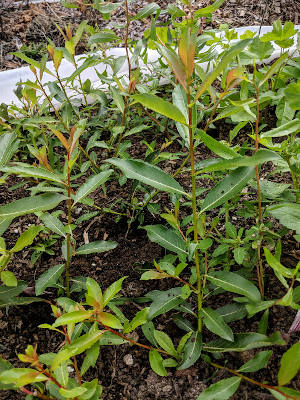
Siberian Pea Shrub: has a hard seed and can be given the same hot water treatment as honey locust and sown in the spring.
Willows: Willows are so dang easy. A good one to start with if you’re a newbie. Just stick dormant stick into the ground the right way up and you’ve done it. One of the twigs from my willow pruning got dropped and partially covered with woodchip mulch and I discovered it during the summer with vigorous roots and shoots. Hardwood cuttings and softwood cuttings both root quickly and produce vigorous young plants. Thicker cuttings seem to work especially well with willows. You can also plant larger cuttings directly into the field, rather than a nursery bed. This is called “live staking.” I aim for a thick 2-3 foot long cutting pushed more than halfway into the ground.