
There are many, MANY, planting guides available online, so search around and do a little research if you’re new to working with a particular kind of plant, or if you’ve never planted bare root trees before. You want to be familiar with the basic cultural requirements of the plant you’re working with so that you can find a spot in which it will thrive. If you’ve done this before, this will all seem like common sense, but if you haven’t there are a lot of little details that can help increase your success.
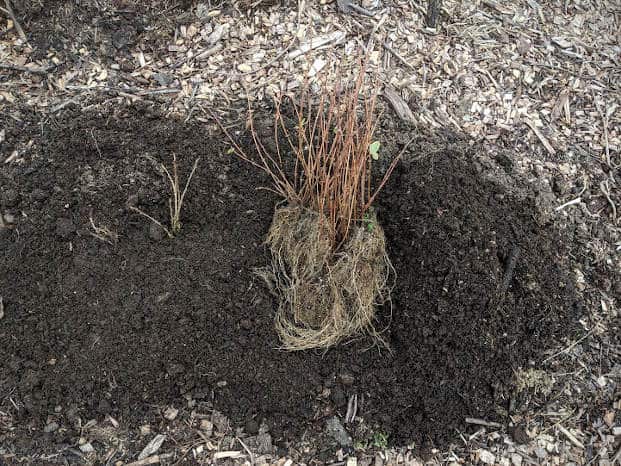
When you receive your plants:
- Plant them as soon as you can. If you can plant them within a day or two you can leave them in a cool (not frozen) shady place still in the packaging. A cool basement for example would be fine. It’s ok to plant even if there’s snow on the ground—the plant will be fine, and as long the ground isn’t frozen solid and you can dig a hole, you can plant a tree.
- If you can’t plant them within a day or two, I would recommend heeling them in (this is basically just getting the roots in the soil in a temporary place). They can be all bundled together in a single hole. The roots have to stay consistently moist and protected from extreme temperatures, and putting them in the ground is the best way to accomplish this. If you have a root cellar or happen to own a cold storage facility you could store them in moist sawdust or something like that, but it’s really much safer and less hassle to just get them in the ground if you can.
How to plant a bare root tree:
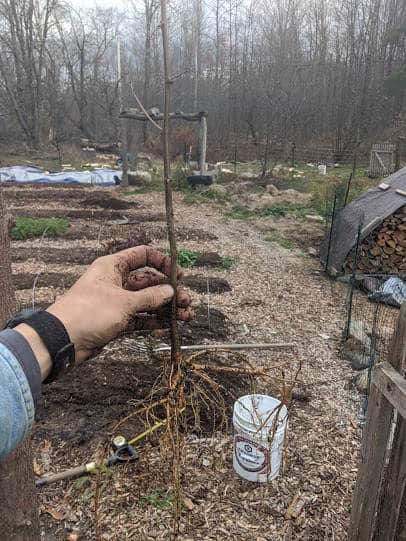
- Don’t let the roots dry out! They dry out especially quickly if they are in sun and if there is wind. Put them in a bucket of water if you can and letting them soak for a while (not longer than 24 hours is a good recommendation. Though, side note—once I accidentally dropped a bare root tree in my garden pond and it spent the entire winter frozen in there—I discovered it in the spring and planted it and it survived. So it just goes to show that you can do the complete opposite of what’s recommended and get away with it sometimes.)
- Dig a hole large enough so that you can spread out the roots of the plant. If there is a root that is absurdly long you can cut it, but in general I try not to cut too much of the root system if I can help it.
- Spread the roots out so that there aren’t any wrapped around each other or around the tree. Wherever you put these roots are where they will stay for a long time—they’ll get larger and choke each other out if they’re entangled when planted.
- Backfill the hole with one hand while you’re holding the tree at the right level with the other hand. You want it to be at the same depth at which it grew in the nursery. You can usually see a change in bark color above the roots, so aim for that line to be flush with the ground. Don’t mix in any fertilizer. Just use the soil you dug out of the hole. Unless the soil you’re planting into is truly truly awful, and then some amending in the planting hole might be a good idea. Make sure the soil is touching the roots and there aren’t any big air pockets. I press firmly down on the soil with my foot to accomplish this. You don’t have to worry about soil compaction from this, it’s more important that you get good soil-to-root contact.
- I like to mulch over the top with compost and then wood chips. You get fertility and water retention by doing this. It works quite well and accomplishes 3 of the main things the main things you have to think about in the first year: weed control, consistent moisture, and fertility.
- WATER. Water the tree when you first plant it and then make sure to water it more if it isn’t raining. This is really critical as the tree gets established. Once it’s been in the ground for a few years, it will have a much more substantial root system and will be more resistant to droughts.
- If you’re in an area with a lot of deer (and probably even in areas without a super high population) you should protect the trees from them. They’ll nibble just about anything to try it out, even things that are supposedly “deer proof.” They can set a tree back years in its growing journey and will come back year after year for a tree they like. A 2-3’ ring of 4′ or 5′ tall 2×4” welded wire around the tree held in place by a stake works well to deter them. You can kind of hide them with other surround support plants, if you have more tolerance for potential loss. I wouldn’t waste time using soap or blood or eggs or any other smell deterrent. They only work temporarily, if at all. You really need some kind of physical barrier.