

Permaculture isn’t just a gardening method—it’s a philosophy of working with nature, not against it. Nut trees embody this principle perfectly. They’re perennial powerhouses that provide food, habitat, and ecological balance. Unlike annual crops that require constant replanting and intense management, these trees become long-term partners in your garden’s story.
In New England, where our landscapes dance between rocky soils, challenging winters, and short growing seasons, selecting the right nut trees isn’t just gardening—it’s an art form. Each variety brings its own character, its own rhythm to the landscape.
1. Hazelnuts: Compact Powerhouses
When people think of nut trees, they often imagine massive, sprawling giants. Enter the hazelnut—nature’s delightful contradiction. These compact shrubs/small trees are perfect for gardeners with limited space or those just beginning their nut tree journey.
Hybrid hazelnuts combine the disease resistance and toughness of the native American hazelnut (Corylus americana) with the nut size and production of the European hazelnut (Corylus avellana). They’re well-suited to New England’s climate. They’re remarkably adaptable, thriving in everything from full sun to partial shade. Most varieties grow 8-12 feet tall, making them ideal for smaller properties or as part of a diverse food forest design. They make a fantastic hedge when planted close together.
But hazelnuts aren’t just about size—their precocity is also very valuable. While many nut trees might take a decade or more to produce, hazelnuts can start yielding nuts in just 3-4 years. Wildlife loves them too. Birds, small mammals, and pollinators are drawn to these trees, turning your garden into a vibrant ecosystem.
They are also extremely hardy and tough plants. They can thrive down into zone 4 and even in zone 3 in some cases. They’re adaptable to many soil types and are drought resistant once well established. I’ve accidentally left some in an elevated air prune box all winter where their roots were essentially in a block of ice for several months, and while most plants would have died they were perfectly fine when spring came.
Oh yeah, and they’re also delicious too! Hazelnut butter is a delicacy you’re not going to find in any store any time soon, so you’re going to have to make some yourself.
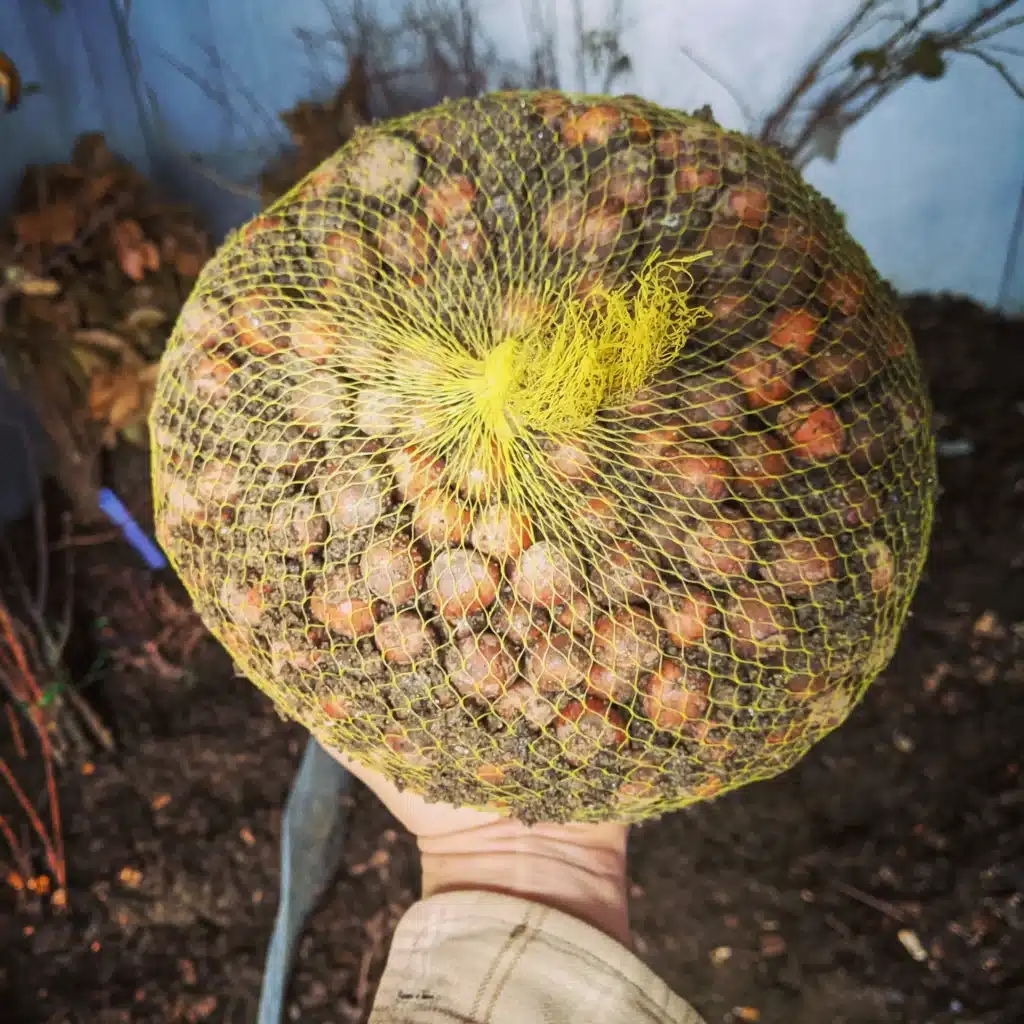
2. Chestnuts: The Bread Trees
Chestnuts have a dramatic history in North America. Once dominant in our forests, they were nearly wiped out by blight in the early 20th century. But plant breeders and passionate growers have been working tirelessly to develop blight-resistant varieties that can reclaim their former glory.
For New England gardeners, hybrid chestnuts like the Chinese-American hybrids offer incredible resilience. These trees combine the robust growth of American chestnuts with the disease resistance of Chinese and Japanese varieties. Imagine trees that can produce 50-100 pounds of nuts per year, with beautiful, spreading canopies that provide shade and sustenance.
Chestnuts are currently experiencing widespread attention as a tree that can serve as a climate friendly staple crop. Hundreds of acres throughout New England, Mid-atlantic, and Midwest are being planted to Chestnuts. Breadtree Farms is a local organization working to establish a chestnut industry in the Northeast.
Chestnuts prefer well-drained, slightly acidic soils—something many New England landscapes naturally provide. Plant them in full sun and well drained soil, and you’ll be rewarded with not just nuts, but a living piece of ecological restoration.

3. Heartnuts: Unexpected Delicacy
If nut trees had a beauty pageant, heartnuts would win “Most Unique.” These Japanese walnut varieties produce nuts shaped exactly like their name suggests—perfect little hearts.
Heartnuts are remarkably cold-hardy, making them an excellent choice for New England gardens. They do much better here than their relatives English Walnuts, which are the kind you generally see available commercially in grocery stores. Heartnuts nuts have a sweet, mild flavor that’s less tannic than traditional walnuts. The trees themselves are ornamental, with graceful branches and attractive foliage that makes them as beautiful as they are productive.
They do best with some protection from harsh winds and in areas with good air circulation. Plant them near the edge of your property or as part of a mixed tree border, and watch them thrive.
4. Black Walnut: Delicious Native Nut Tree
Not only do black walnuts produce rich, flavorful nuts, but their beautiful rot-resistant wood is highly prized in furniture and instrument making. A mature black walnut can be worth thousands of dollars in timber alone. They become huge epic trees, not a good choice for a small yard, but excellent for someone with some land to work with.
Black walnuts do come with a caveat—they produce allelopathic chemicals that can inhibit the growth of nearby certain plants. This isn’t a drawback but an invitation to thoughtful design. Plant them strategically, understanding their growth habits, and they become keystone species in your landscape. It’s a real thing but usually not too much of an issue with a little planning and selection of suitable companion species.
In New England, native black walnut varieties are very well-adapted to our climate. They prefer deep, rich soils and full sun. Patience is key—these trees can take 7-10 years to start serious nut production, but they’ll continue producing for decades.
5. Hickory: Perhaps the most epic of them all?
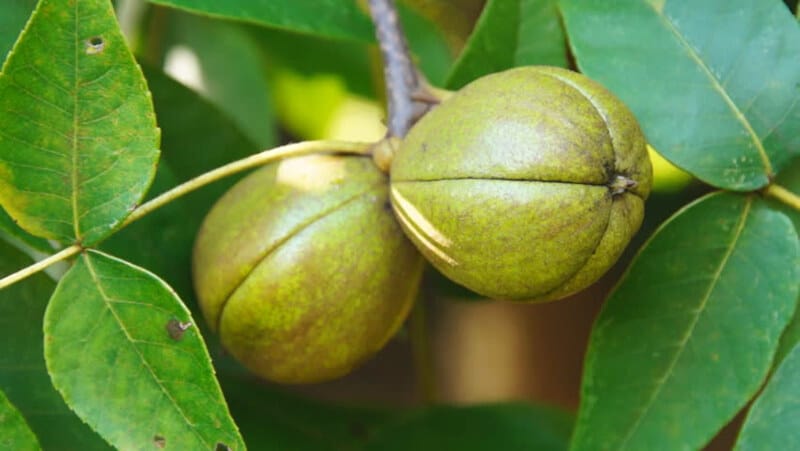
Hickories are the rugged individualists of the nut tree world. With over a dozen native species, they offer incredible diversity. Shagbark and shellbark hickories are particularly well-suited to New England, producing nuts with a rich, almost smoky flavor that puts store-bought nuts to shame. I find them to be similar to their delicious cousins, the pecan, but with an even more robust flavor.
These trees are marathoners, not sprinters. They grow slowly but steadily, developing deep root systems that make them incredibly resilient. A mature hickory can live 200-300 years, becoming a multi-generational gift to your landscape.
Hickory nuts require some processing—their shells are notoriously hard. But for those willing to invest a little elbow grease, the reward is a nut with complex flavor profiles that commercial growers can only dream about.
However, hickory nut milk is a wintertime delicacy that takes the tediousness out of the cracking. It’s the perfect beverage simmering on the woodstove while snow is falling outside. Excellent video on hickory processing and nut milk here.
Beyond Trees: A Philosophy of Planting
Starting a nut tree journey isn’t just about the trees—it’s about creating a living, breathing ecosystem. Each tree you plant is an act of hope, a commitment to soil health, biodiversity, and sustainable food production.
Don’t get caught up in perfection. Some years, certain trees might produce less. Some might struggle. That’s not failure—that’s farming. The universe is abundant, and nature is endlessly creative. Your job is just to be an actor in the grand play— observe, learn, and keep planting.
If these trees have sparked something in you—a vision of your future landscape, a dream of homegrown nuts, a connection to the land—I encourage you to take the next step. Visit our nursery store, browse our selections, ask questions. We offer bare-root varieties of each of these remarkable trees.
May your gardens be wild, your harvests abundant, and your connection to the earth profound.
Happy Planting!