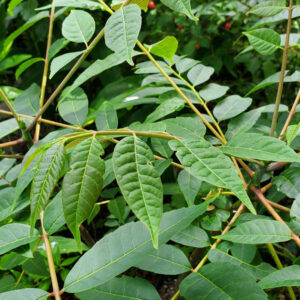
Thornless Honey Locust (Gleditsia triacanthos var. inermis)
At first glance, thornless honey locust might seem like just a lovely, fast-growing tree for shade. But dig a little deeper, and you’ll find a true multi-purpose ally for food forests, agroforestry systems, and regenerative landscapes. Native to the central and eastern U.S., this variety lacks the menacing thorns of its wild cousin—but keeps all the benefits.
This is one of those quiet contributors that makes an ecosystem better just by being there.
Edible & Medicinal Uses
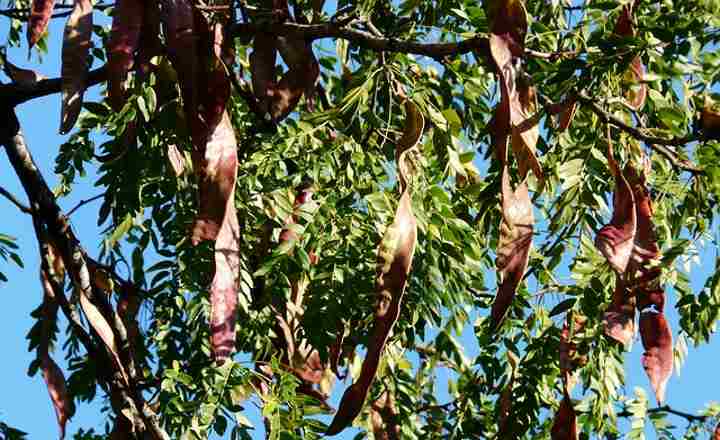
Yes, the pods are edible! The long, twisting seed pods—ripening in late summer or early fall—contain a sweet, sticky pulp that tastes a bit like raw sugar or dates. Traditionally, Indigenous communities and early settlers used them as a natural sweetener or fermented them into mild beverages. The seeds are quite hard but they are also edible after boiling them for a long time. They taste a bit peanut-y to this guy’s palate.
The pods also make excellent high-carb forage for livestock—cows, sheep, goats, pigs, and chickens will eagerly help with clean-up under a mature tree. Some permaculture growers even use honey locust as part of a living fodder system.
Ecological Benefits
This tree shines as a support species in food forests and silvopasture systems. Though not a nitrogen fixer in the traditional legume sense, honey locust improves soils in other ways—its leaf litter breaks down quickly, adding organic matter, and its deep roots help break up compacted ground, improving structure and water infiltration.
The airy canopy casts just enough shade to keep things cool in summer without choking out sun-loving understory plants. You can tuck shade-tolerant berry bushes, herbs, or perennials underneath with great success.
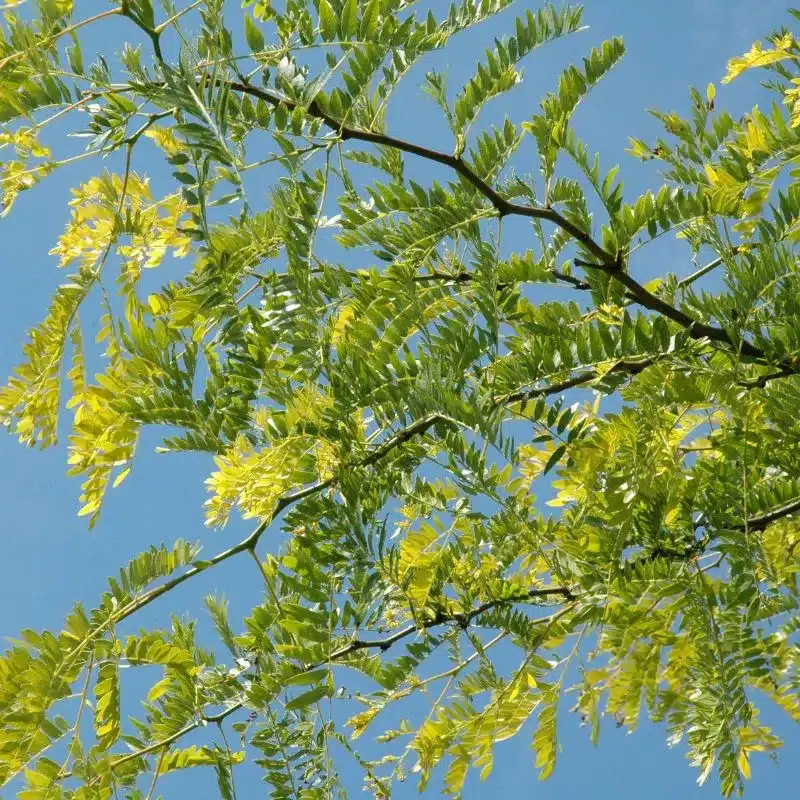
It also provides valuable habitat: pollinators love the tiny greenish-yellow flowers in spring, and birds appreciate the filtered cover.
Growing Thornless Honey Locust
Honey locust is one of the most adaptable trees we grow. It tolerates drought, poor soil, urban pollution, and occasional flooding, hence its common use as a street tree. USDA Zones 4–9 are all fair game. It prefers full sun and grows quickly—often 2–3 feet per year when young—eventually reaching 40–70 feet tall depending on conditions.
The thornless variety (inermis) is selected specifically for landscape and food forest use, so you don’t have to worry about painful spines. It does, however, still produce pods—an asset, not a nuisance, in a regenerative planting.