Sweet Harvests: Apricot Trees for Your Sustainable Oasis
(Prunus armeniaca)
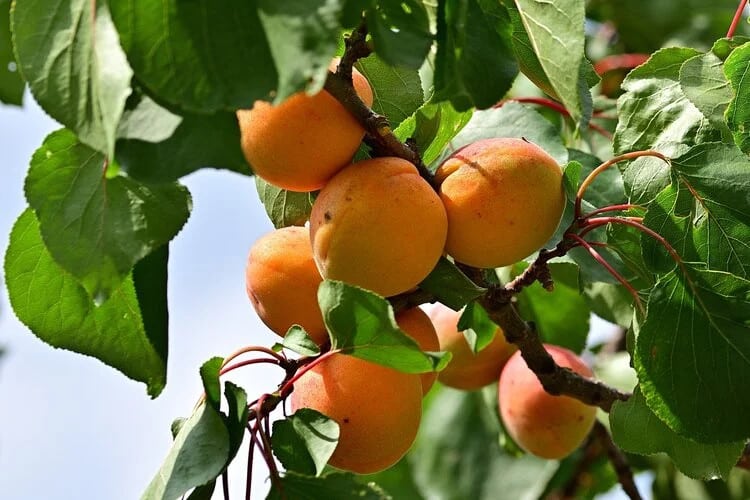
Ready to add a touch of golden goodness to your homestead or garden? Let’s talk about apricot trees – the perfect blend of beauty and bounty for your outdoor space.
Whether you’re a seasoned homesteader or just someone who loves the idea of plucking fruit from their own backyard, apricot trees are a fantastic choice for a manageable-sized and highly ornamental fruit tree.
Our bare-root apricot trees are eager to put down roots in your little corner of the world. With some love and patience, you’ll soon have a thriving tree that rewards you with sweet apricots year after year.
Nurturing Your Apricot Tree:
Apricots are pretty easy-going, but they do have a few simple needs:
– They’re sun-worshippers, so find them a bright spot
– Well-drained soil keeps their roots happy
– A yearly pruning session in late winter helps maintain their shape
Worried about whether apricots will thrive in your area? Most varieties are hardy in USDA zones 4-9, (down to zone 3 in some cases) which covers a good portion of the country. As for pollination, some apricot trees are self-fertile, but all will benefit from a pollination partner.
The main challenge to growing them in the Northeast, where I am, is damage by early frosts and their lack of tolerance for a high humidity climate. That’s why I’m growing seedlings from parents that flower later and are more suited to life in New England! Apricots come pretty similar from seed, so this is a good option. See below for variety descriptions.
Ready to dive into the world of homegrown apricots? Planting one of our bare-root trees is like opening a gift to your future self. Before you know it, you’ll be sharing fresh apricots with neighbors, crafting homemade preserves, and basking in the satisfaction of growing your own food.
Variety Info:
- Mixed Seedlings: Open pollinated seedlings of cultivar parents. Parents include: Zard, Harogem, Sugar Pearls, Golden Giant, Alfred, Corbett, and Harlayne.
- Manchurian: A super-hardy kind of apricot (down to USDA zone 3). It’s a small, fast growing tree that produces sweet golf ballsized freestone fruit that are golden colored. A great pollinator for other apricots as well.
The following descriptions are from Bob Purvis at Purvis Orchard (where I got the seeds):
- Precious: An almond-apricot cross, coming from a 100-year-old tree in southern Ontario province. Sweet kernels. Tree is self-fruitful, hardy into the –40s F., spreading growth habit. Fruit is small to medium sized, thick skin, sweet flesh. Resistant to late spring frosts and bears well in Quebec, eastern England, and SW Idaho. Does best in humid or subhumid climates.
- Zard: Old apricot variety from Iran, name means ‘yellow’ in Farsi. Very late blooming, self fertile, fruit medium sized, pale yellow, sweet, large pit with sweet kernel, ripens mid-late season, productive in SW Idaho. Tree requires high chilling hours and considerable heat before it breaks dormancy. Has withstood –33F in SW Minnesota and borne a full crop. Growth habit is very upright. Has been well received by customers at the farmers’ markets I take it to.