Mulberry

Mulberry

Price range: $21.00 through $35.00

Quantity

FREE Shipping on orders over $225
FREE 1-Year Warranty

Out of stock

Category:

Mulberry: A Bountiful Tree for Edible Landscapes

(Morus spp.)

Mulberry is a fast-growing, deciduous tree prized for its abundant, sweet fruits. At Humble Abode Nursery, we offer selected cultivars of this productive tree for those seeking a low-maintenance fruit option.

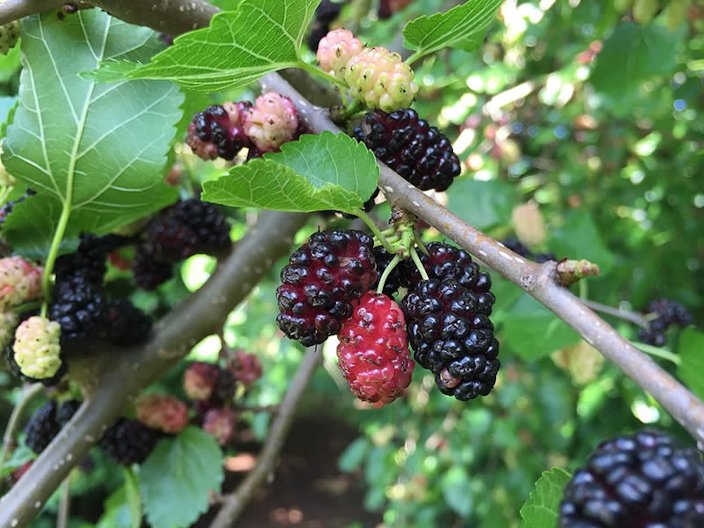
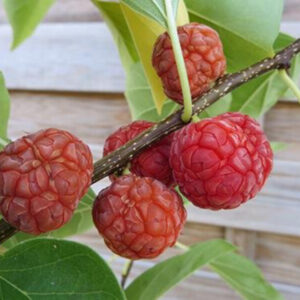
Typically growing 30-40 feet tall and wide (but they can be kept significantly smaller than that with regular pruning), Mulberries feature heart-shaped leaves that can vary in shape, even on the same tree. In late spring, they produce inconspicuous flowers followed by fruit that resembles elongated blackberries.

These trees thrive in full sun to partial shade and are adaptable to a wide range of soil conditions. They’re hardy in USDA zones 4-8, with some cultivars tolerating even colder climates down to zone 3. Mulberries are notably drought-tolerant once established and can withstand urban conditions.

The fruits are sweet and juicy, excellent for fresh eating, pies, jams, or even wine-making. They’re rich in antioxidants and vitamin C. Be aware that the fruits can stain, so consider placement carefully or choose a white-fruited variety.

Mulberries are generally pest and disease resistant, making them a low-maintenance option for home orchards. They’re self-fruitful, ensuring good fruit production even with a single tree. Fruiting usually begins within 2-3 years of planting.

These trees provide valuable food and habitat for wildlife, especially birds. The leaves are also the primary food source for silkworms, making them interesting for those interested in small-scale silk production. The leaves are edible for humans as well!

By incorporating Mulberries into your landscape, you’re adding a productive, low-maintenance fruit tree that offers both food and habitat. Whether you’re expanding your home orchard, creating a food forest, or looking for a fast-growing shade tree with edible benefits, Mulberries offer a versatile and rewarding choice.


Variety Info:

  • Seedling—Mulberries grown from seed often give great fruit, but there is a some variability, as well as non-fruiting males, so it’s a gamble as well.
  • ‘Illinois Everbearing’—This has been the gold standard for a hardy mulberry for decades. Large fruit with excellent flavor, extremely productive and keeps fruiting all summer into early fall.
  • ‘Northrop’—super hardy variety from northern New York, original tree well over a century old, produces excellent fruit though with a shorter harvest window than the “everbearing” types. Hardy to zone 3.
  • ‘Tehama’—A productive white-fruited variety known for its large, sweet fruits and extended harvest season. I usually see it described as being hardy only down to zone 7 but it has done fine for me in zone 5.
  • Gerardi Dwarf—A dwarf mulberry, reaching only 8-12 feet, ideal for small spaces. Fruit quality is excellent. The internodal space between buds is much less than other mulberries, which results in a much more compact tree. Notably, this variety is immune to popcorn disease, a common issue in other mulberry cultivars. Originally introduced by Louis Gerardi of Gerardi Nursery in Illinois.
  • ‘Lawson-Dawson’—A vigorous black-fruited cultivar that produces abundant, flavorful berries ideal for fresh eating and preserves.
  • ‘Sweet Lavender’—A unique mulberry variety featuring non-staining pale lavender-colored fruits with a delicate, honey-sweet flavor.
  • ‘Early Bird’—As its name suggests, this mulberry variety ripens early in the season, offering sweet black fruits before other cultivars.
  • ‘Trader’— The original Trader Mulberry tree was brought over from Germany by the Trader family in 1882. It’s still thriving in North Dakota over 125 years later. This mulberry is a cross between Morus alba and Morus Rubra, similar to the Illinois Everbearing, but more cold hardy.
  • ‘El Dorado’—A new and highly productive mulberry variety from Hungary known for its large, elongated fruits with a perfect balance of sweetness and acidity.
  • Kokuso’—From Korea, this mulberry is said to be a bit hardier than ‘Illinois everbearing’ sometimes doing well in zone 4. It has large berries, up to 2 inches long, and is fast to come into bearing.
  • ‘Russian’ (Morus alba var. tartarica)—These seedlings are an extra hardy subspecies of Morus alba that give great fruit. Like Morus alba, the fruit color can range from white to dark purple.
  • ‘Everloving’ mulberry is a selection that comes by way of Akiva Silver of Twisted Tree Farm. He reports that it has excellent flavor, as good or better then ‘Illinois Everbearing’ and is also of the everbearing type, with dark fruits from late June through end of September.

Additional Growing Notes:
—They absolutely love light and heat! They’re adaptable to many soil types and they’re tolerant of dry soils. If they can survive in a crack of city asphalt, they can probably survive in your yard! Give them a dose of composted manure. They will love it.
—Seedlings can be male or female. Only a female is needed to make fruit. Male pollen is only needed to make viable seeds.
Free Shipping on Orders over $225

X
Join Waitlist We will inform you when the product arrives in stock. Please leave your valid email address below.
0