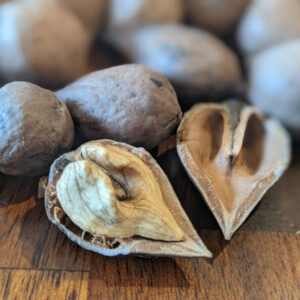
Bird Cherry (Prunus virginiana)
A hardy native with a wild edge—Bird Cherry brings food, medicine, and fierce resilience to your landscape.
Prunus virginiana is a true backbone species for food forests and native plantings. It’s not a delicate tree. It’s tough, adaptable, and a little wild—in the best way. With its deep cultural roots, high wildlife value, and multiple uses for humans, Bird Cherry is the kind of plant that quietly supports a whole ecosystem while asking very little in return.
Edible & Medicinal Uses
Don’t call it a chokecherry!
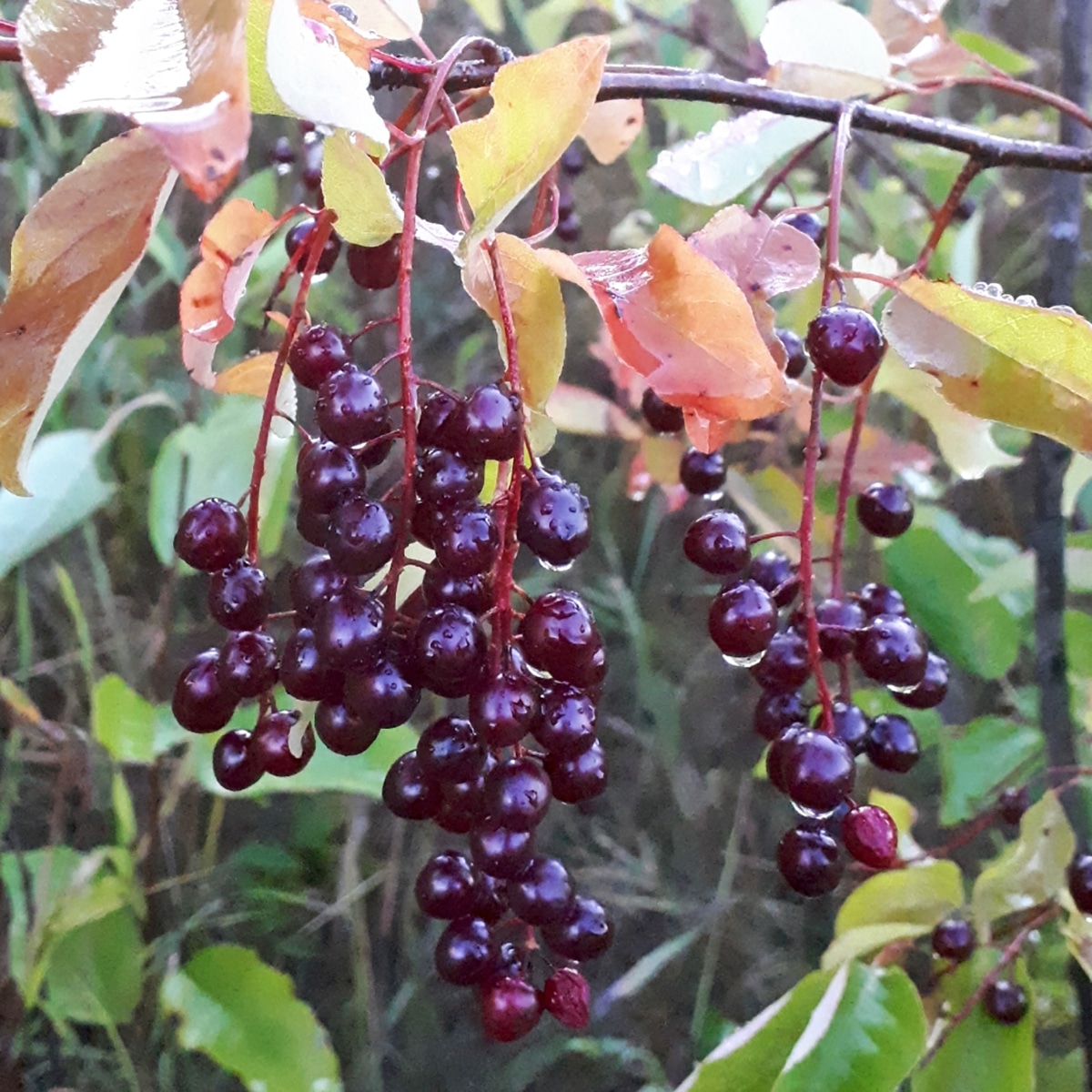
The bird cherry gets its common name “chokecherry” from its tart astringent fruit. It’s true that raw, the berries are mouth-puckering and the raw seeds are toxic. But cooked or dried, with the pits included, they transform into something truly special. The once cooked or dried the pits no longer contain toxins, and provide the most delicious almondy flavor. Once I figured this out, it blew my mind and completely changed the way I view the use of bird cherries in the landscape. Credit to Alan Bergo at Forager Chef for the idea! Here’s a link for more info on the culinary uses of bird cherry: https://foragerchef.com/category/wild-fruit/chokecherry/
Growing Bird Cherry
Bird Cherry is extremely adaptable. It thrives in USDA Zones 2–7 and tolerates a wide range of soils—dry, wet, clay, loam, sandy—it doesn’t fuss. Full sun produces the best fruit yields, but it’ll also grow in partial shade. This versatility makes it an excellent choice for hedgerows and food forest edges.
It typically grows as a large shrub or small tree, reaching 15–25 feet in height. You can let it grow as a natural thicket (which birds love) or prune it into a more formal tree shape.
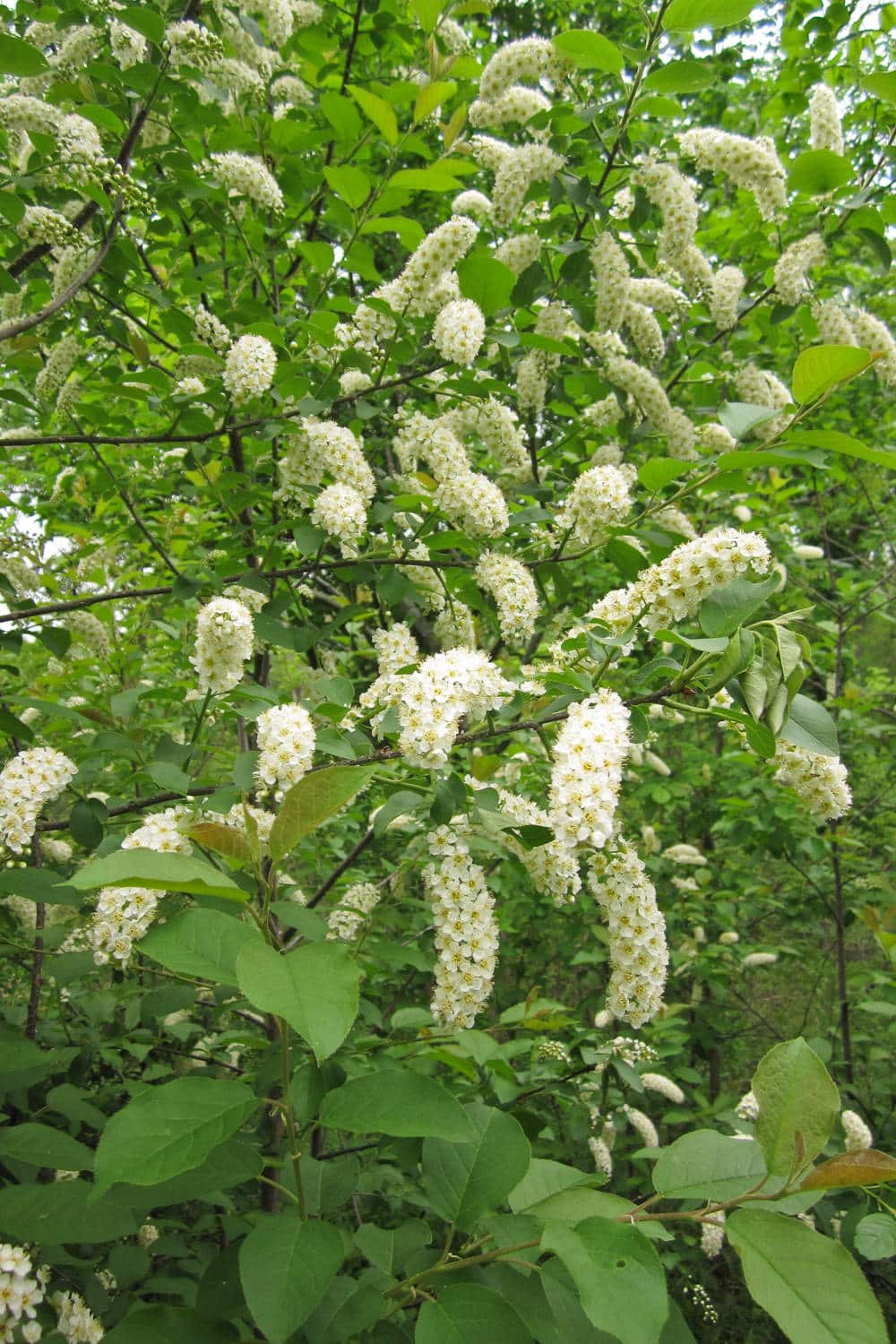
Bird Cherry is also a wildlife magnet. Its early-spring blossoms feed pollinators, while its late-summer fruit is devoured by birds (as the name suggests), as well as bears, and everything in between. It’s also a host plant for several species of butterfly and moth caterpillars, making it a cornerstone of native biodiversity.