
If I had to hand out an award for “most underrated fruit tree,” I’d give it to the chokecherry (Prunus virginiana).
Now, I get it — with a name like chokecherry, it doesn’t exactly make you want to grab a handful and dig in. Between the asphyxiation vibes and the old stories about poisonous pits, this poor tree never really had a chance at mainstream popularity. That’s why I prefer to call them bird cherries. Not perfect, but at least it doesn’t sound like a death threat.
My personal aha moment came a few years ago when I was eating a bunch of them and just… couldn’t be bothered spitting out the pits. So I crunched them up right along with the berries. Lazy? Definitely. But also life-changing. The tart fruit plus the nutty, almond flavor of the pits together tasted like amaretto — smooth, rich, balanced. Later I learned you’re supposed to cook the pits first (the raw pits contain compounds that break down with heat), and that foragers far smarter than me had already figured this out thousands of years ago. Alan Bergo at Forager Chef has a great write-up on it if you want to go deep.
Since then, I’ve thought of chokecherries as little miracle trees. Mine gets zero care and still produces a heavy crop every single year. When I remember to beat the birds to it, it makes an amazing snack or fruit leather. You can dry the berries whole and grind them into a kind of flour. Apparently it makes a delicious traditional Siberian cake. It’s just one of those deeply generous trees that quietly does its thing while everyone else ignores it.
What Is a Chokecherry Tree?
Chokecherry (Prunus virginiana) is a native North American shrub or small tree in the rose family, closely related to plums, peaches, and cherries. It grows naturally across an enormous range — from Newfoundland to British Columbia, south through most of the continental US — making it one of the most widely distributed native woody plants on the continent.
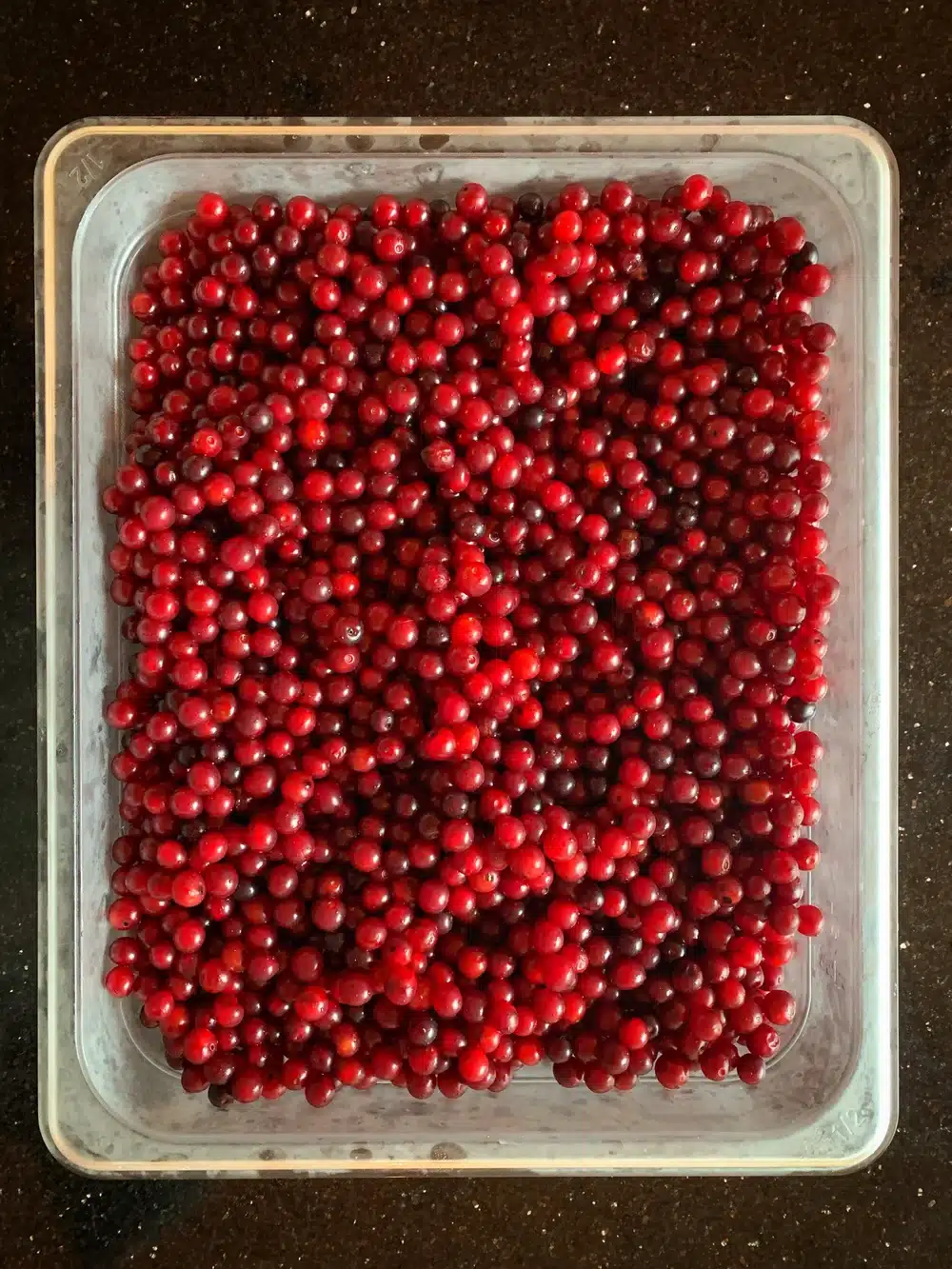
It produces long, drooping clusters of small dark red to near-black fruit in late summer, each containing a single pit. The raw fruit is astringent and tart (hence the name), but fully ripe fruit eaten fresh is pleasantly tart-sweet, and cooked or processed it’s genuinely exceptional. Indigenous peoples across North America used it extensively — fresh, dried, cooked into pemmican, and fermented — and it remains one of the most culinarily versatile native fruits available to growers today.
Despite all of this, you almost never see it in nursery catalogs. That’s a gap worth filling.
Chokecherry vs. Black Cherry: What’s the Difference?
This causes confusion regularly, so it’s worth clearing up. Chokecherry (Prunus virginiana) and black cherry (Prunus serotina) are closely related and often found growing in similar habitats, but they’re distinct species.
Black cherry grows into a much larger tree — 60 to 90 feet at maturity — and is primarily valued for its timber. Its fruit is smaller and darker. Since it’s usually way up high you usually only come across them after they’ve fallen to the ground. Chokecherry stays much smaller (typically 10–25 feet), fruits more heavily relative to its size, and produces fruit that’s more immediately useful for harvesting, eating, and cooking, in my opinion. For food forest and edible landscape purposes, chokecherry is the more practical choice of the two.
To further confuse things, they’re also different from chokeberries which is a common name given to Aronia.
How to Grow Chokecherry
If you’re looking for a low-maintenance addition to your edible landscape, chokecherry is about as close to plant-it-and-forget-it as you’ll find in a fruiting woody plant.
Hardiness and climate: Chokecherry is EXTRAORDINARILY cold-hardy — reliably to Zone 2, which covers virtually the entire continental US and most of Canada. It’s one of the few fruiting trees that performs well in the northern Great Plains, where most fruit trees struggle. In warmer climates it grows fine but may fruit less heavily.
Sun and soil: Full sun produces the best fruit crops, though chokecherry tolerates part shade better than most fruiting trees. It’s adaptable to a wide range of soils — clay, loam, sandy, rocky — and once established handles drought well. It does prefer good drainage, so avoid chronically wet sites.
Size and form: Left unpruned, chokecherry typically grows as a multi-stemmed large shrub or small tree reaching 10–25 feet. It spreads readily by root suckers, which can be an asset (free new plants) or a management consideration depending on your situation. In a food forest it works well as an understory or edge planting; in a more managed garden it can be trained to a single trunk with some early pruning.
Pollination: Chokecherries are self-fertile, meaning a single tree will produce fruit without a pollination partner. Having multiple trees will generally improve fruit set and crop size, but it isn’t required.
Establishment: Chokecherry transplants readily as a bare root seedling in early spring. It establishes quickly relative to most fruit trees — expect meaningful growth in the first season and fruit within 2–4 years. Once established it requires essentially no inputs: no spray program, no regular fertilization, no irrigation beyond normal rainfall.
Wildlife value: Be prepared to share. Birds — robins, cedar waxwings, catbirds, and many others — love chokecherries and will descend on a ripening tree in numbers. This is either a feature or a bug depending on your perspective. Planting more than one tree is the practical solution: one for you, one for the birds.
How to Use Chokecherries
Raw off the tree, fully ripe chokecherries are tart and astringent but pleasant in small quantities — think of them like a sour candy. Where they really shine is in processing:
Fruit leather is probably the easiest and most satisfying use — cook the fruit briefly, press through a strainer to remove pits and skins, sweeten lightly, and dry. The result is intensely flavored and keeps well.
Juice and syrup made from chokecherries have a deep, complex flavor — tart, slightly tannic, reminiscent of black cherry but more interesting. Excellent in cocktails, shrubs, and sauces.
Jelly and jam are traditional uses across much of North America and Scandinavia, where related Prunus padus (bird cherry) has been used in baking for centuries. The Siberian bird cherry cake (Cheremukhoviy tort) — made with dried, ground bird cherry — is one of the more remarkable things you can do with this fruit and worth seeking out if you’re curious.
Dried and ground: Traditionally, whole chokecherries (pits included) were dried and ground into a paste used in pemmican. The cooking process neutralizes the amygdalin in the pits, leaving behind that distinctive almond-amaretto flavor that made me stop spitting out the pits in the first place.
Chokecherry in the Food Forest
Chokecherry is a genuinely excellent food forest plant for reasons beyond the fruit alone. It’s native across most of North America, meaning it supports a wide range of native insects and wildlife. It fixes no nitrogen, but its fallen leaves break down quickly and contribute organic matter to the soil. It tolerates shade well enough to thrive at the edges of a canopy planting. And its tendency to spread by root suckers means it will slowly fill in an edge or hedgerow over time, creating a productive thicket that requires no replanting.
At Humble Abode Nursery, we grow chokecherry seedlings from a heavy-bearing parent specimen that’s been quietly doing its thing on our land for years. If you want a carefree, abundant food forest tree that almost nobody else is growing, [this is the one →]
