
If there’s one native fruit tree I’d recommend to most growers in the eastern United States, it’s the American persimmon. Hardy, adaptable, low-maintenance, and producing fruit of extraordinary quality when fully ripe — it’s one of those plants that, once you know it, makes you wonder why it isn’t in every backyard and food forest in the country.
The short answer to why it isn’t: most people haven’t tasted a ripe one. And the ones who have are usually converts for life.
Here’s everything you need to know to grow one successfully.
What Is American Persimmon?
American persimmon (Diospyros virginiana) is a native North American fruit tree with a natural range covering most of the eastern US, from southern Connecticut down through Florida and west into Kansas and Texas. It’s been growing here for thousands of years — long before European settlement, Indigenous peoples harvested and dried persimmons as a staple food, and the trees remain abundant in hedgerows, forest edges, and old fields across much of the country.
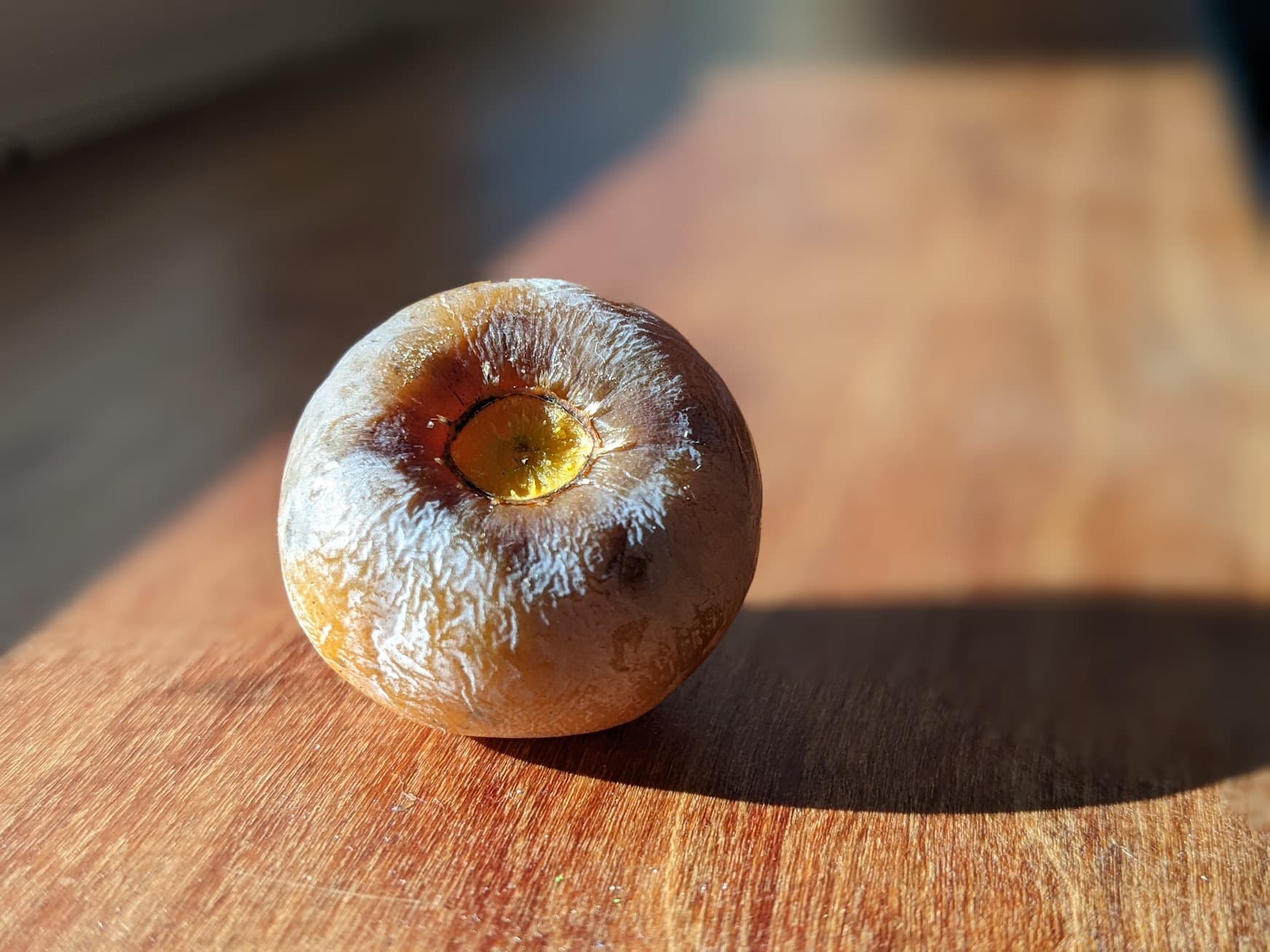
The fruit is small compared to the Asian persimmons you might find at a grocery store — typically somewhere around golf ball sized, orange to deep red when ripe, with a flavor that stops people in their tracks. Rich, honey-sweet, pudding-textured, with a complexity that’s hard to describe. Some people taste brown sugar and cinnamon. Others taste apricot or dates. Most people taste it and immediately want more.
The important caveat — and it’s a real one — is that American persimmon must be fully ripe before eating. An unripe persimmon is astringent in a way that is almost comically unpleasant, a sensation like your entire mouth has been lined with dry wool. A fully ripe persimmon, soft and yielding after frost, is one of the finest fruits that grows in North America. The difference between these two experiences is enormous, so timing your harvest correctly is probably the single most important thing to understand about this fruit.
American Persimmon vs. Asian Persimmon
This comparison comes up constantly, so it’s worth addressing directly.
Asian persimmons (Diospyros kaki) are the large, orange, tomato-shaped fruits sold in grocery stores and Asian markets. They come in two types: astringent varieties (which, like American persimmon, must be fully soft before eating) and non-astringent varieties (which can be eaten firm, like an apple). Asian persimmons are excellent fruit — but they’re only reliably hardy to about Zone 7, which puts them out of reach for a large portion of the US.
American persimmons are smaller-fruited, always astringent until fully ripe, and hardy to Zone 4. What they lack in size they more than compensate for in flavor — many people who’ve tasted both consider the American persimmon the superior fruit — and in toughness. If you’re in the northern half of the country, American persimmon is the persimmon for you.
Where to Plant American Persimmon
American persimmon is one of the most site-adaptable fruit trees you can grow. A few guidelines:
Sun: Full sun produces the heaviest crops and best fruit quality. Persimmons will grow and fruit in part shade but won’t perform as well. Aim for at least 6 hours of direct sun if you can.
Soil: Persimmons tolerate a wide range of soil types — clay, sandy, rocky, poor — better than almost any other fruit tree. They prefer well-drained conditions but are more forgiving of occasional wet feet than apples or pears. Avoid chronically waterlogged sites.
Spacing: Standard American persimmons can reach 20–35 feet in cultivation with some management, though they’re often kept smaller with light pruning. Space them at least 15–20 feet apart. In a food forest setting, they make an excellent canopy tree.
Climate: Hardy to Zone 4 (I would try to find a warm microclimate for it in zone 4, and some varieties still might not perform as well), and native across much of Zones 5–9. American persimmon is one of the few fruit trees that genuinely thrives across this entire range without much coddling.
Pollination: The Part That Confuses Everyone
Here’s where persimmons get botanically interesting — and a little complicated. Bear with me.
American persimmons are dioecious, meaning individual trees are either male or female, each producing only their respective type of flower. To get fruit, you generally need both a male tree (for pollen) and a female tree (to set fruit). Plant a single seedling without knowing its sex, and there’s a real chance you’ve planted a male that will never fruit.
However — and this is where it gets fun — persimmons can also be parthenocarpic, meaning female trees sometimes produce fruit without pollination at all. Parthenocarpic fruit is seedless and often smaller, but perfectly edible. So a lone female tree may fruit regardless, especially in certain cultivars.
Some varieties complicate the picture further by being polygamo-dioecious — capable of producing both male and female flowers on the same tree. Szukis is the most notable example of this, and it’s one of the reasons we grow it at Humble Abode.
The practical takeaway: for reliable, heavy fruiting, plant at least two trees. If you’re planting seedlings, the natural ratio of males in the population will take care of pollination as long as you have several trees in proximity.
Growing American Persimmon: Planting and Establishment
Bare root vs. potted: American persimmons transplant well as bare root stock in early spring while still dormant. They have a long taproot, so the sooner you can get them in the ground after receiving them, the better. Don’t let the roots dry out.
Planting: Dig a hole wide enough to spread the roots naturally without bending or circling. Plant at the same depth the tree was growing previously — you can usually see the soil line on the trunk. Backfill with the native soil (no amendments needed in the planting hole), water well, and mulch, keeping mulch away from the trunk. This will suppress weeds and conserve soil moisture.
Establishment: American persimmons can be sometimes slow to establish but extremely resilient once they are. Don’t be alarmed if your tree seems to sulk in its first season — it’s building roots before it builds canopy. Keep it watered through the first summer, especially during dry spells, and then largely leave it alone.
When and How to Harvest
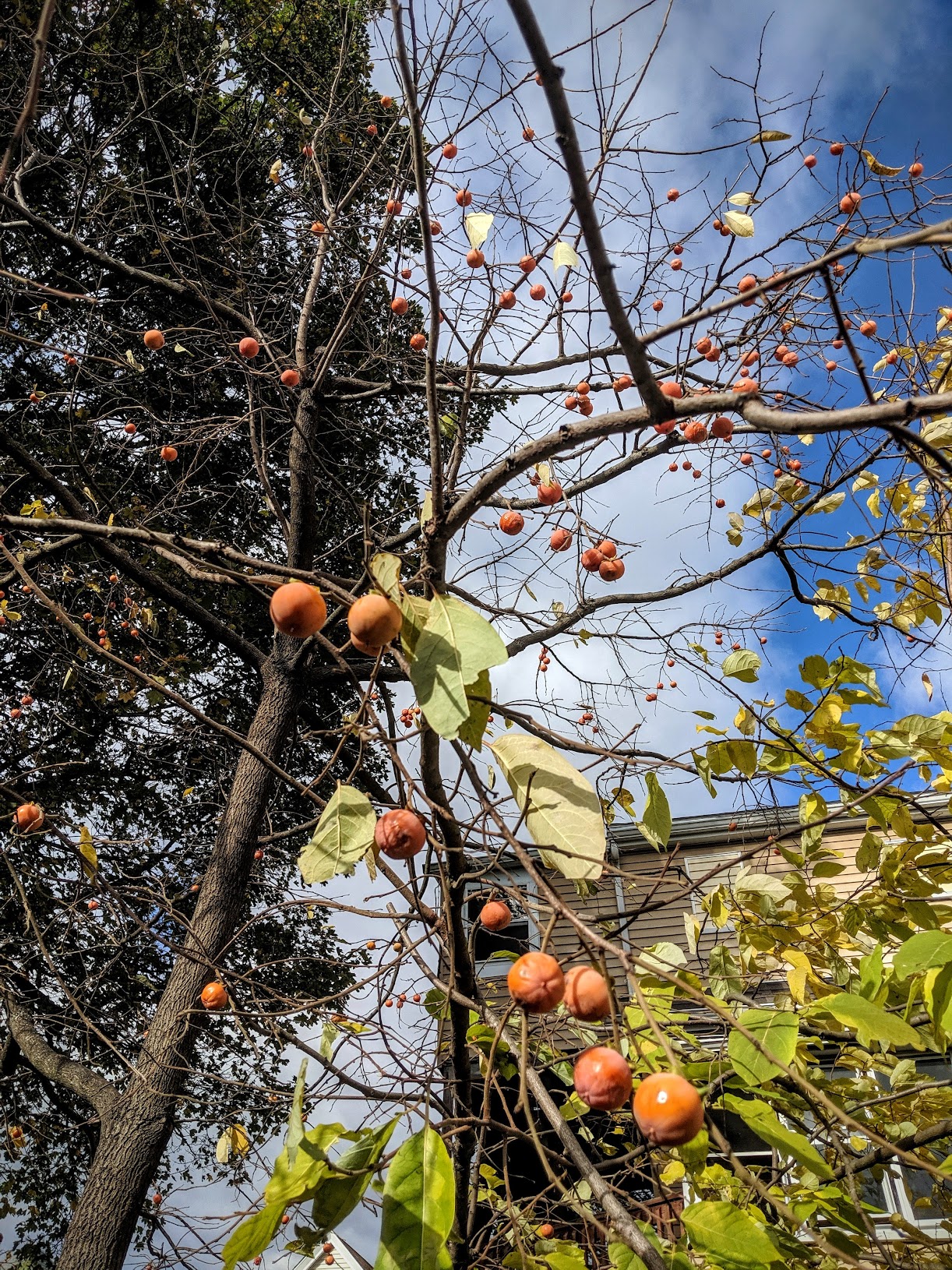
A ripe American persimmon should be completely soft — almost jelly-like — and will often drop from the tree on its own or come free with the lightest touch. The skin will have deepened to orange or reddish-orange. Some trees will actually keep fruit hanging on into the winter, which is pretty cool. If you pick it firm, you will be disappointed. If you pick it properly ripe, you will understand immediately why people who grow these trees talk about them the way they do.
Ripe persimmons don’t store well fresh — a few days at most before they ferment. They freeze beautifully, however, and make exceptional baked goods, puddings, and dried fruit.
Best American Persimmon Varieties
If you’re buying grafted trees, some well-regarded cultivars include Meader (compact, reliable, very cold-hardy), Szukis (notable for producing both male and female flowers), and Prok (large-fruited, heavy-bearing, excellent flavor).
At Humble Abode Nursery, we also sell Prok × Szukis seedlings — bare root seedlings from a cross between these two cultivars. What makes this cross worth seeking out is the genetics: Szukis, when used as the pollen parent, produces feminized seed, meaning approximately 75% of the resulting seedlings are female and thus fruit-producing — significantly better odds than a standard seedling population. They also carry Prok’s genetics for large, high-quality fruit. It’s kind of the best of both worlds—resilience of a seedling mixed with the reliably good genetics of a named variety.
American Persimmon in the Food Forest
American persimmon is an outstanding food forest tree for several reasons beyond just the fruit. It’s native, meaning it supports local wildlife and insects in ways that exotic species don’t. The flowers are a valuable late-spring nectar source for bees. The fruit, dropping in autumn, feeds deer, raccoons, opossums, and a range of birds — making it an important wildlife tree as well as a productive one for humans. The wood is extremely dense and hard (it’s in the ebony family), and the fall foliage is beautiful.
In a food forest planting, it works well as a canopy or sub-canopy tree, leaving space beneath for shade-tolerant shrubs like currants, honeyberries, or spicebush.
American Persimmon FAQ
Do I need two American persimmon trees to get fruit? Not necessarily—many varieties will produce fruit without a pollination partner. I still always like to plant out more than one of everything though, if you have the space to do so. It’s insurance against any future losses, yields are often higher, and you get to understand different varieties and how they function better.
How long does it take for an American persimmon to fruit? Seedling-grown trees typically begin fruiting in 4–6 years, depending on their genetics and how happy they are. Grafted trees from named cultivars fruit somewhat sooner. Full production takes longer — a mature persimmon tree in its prime is a genuinely prolific producer, but it takes years to get there.
When are American persimmons ripe? Typically October through November across most of their range, often around the time of the first frost. The fruit should be completely soft before eating. If it’s at all firm, wait longer.
Why are American persimmons so astringent when unripe? Unripe persimmons are loaded with soluble tannins, which bind to proteins in your saliva and create an intensely drying, puckering sensation. As the fruit ripens, these tannins become insoluble and the astringency disappears completely. This is why timing matters so much.
What is Prok × Szukis? It’s a cross between two named American persimmon cultivars: Prok, known for large, high-quality fruit, and Szukis, a rare variety that produces both male and female flowers. When Szukis is the pollen parent, it produces feminized seed — meaning around 75% of the resulting seedlings will be female and fruit-producing, compared to less than 50% in a typical seedling population.
Can American persimmon be grown in containers? Temporarily yes, but it’s not long-term — persimmons want to be large trees and will much prefer to be in the ground. If you’re in a borderline climate or limited space, a large container can work short-term, but plan to eventually plant it out.
