Marshmallow (Althaea officinalis)
A soft and soothing healer—Marshmallow is a humble powerhouse for both the herb garden and the permaculture food forest.
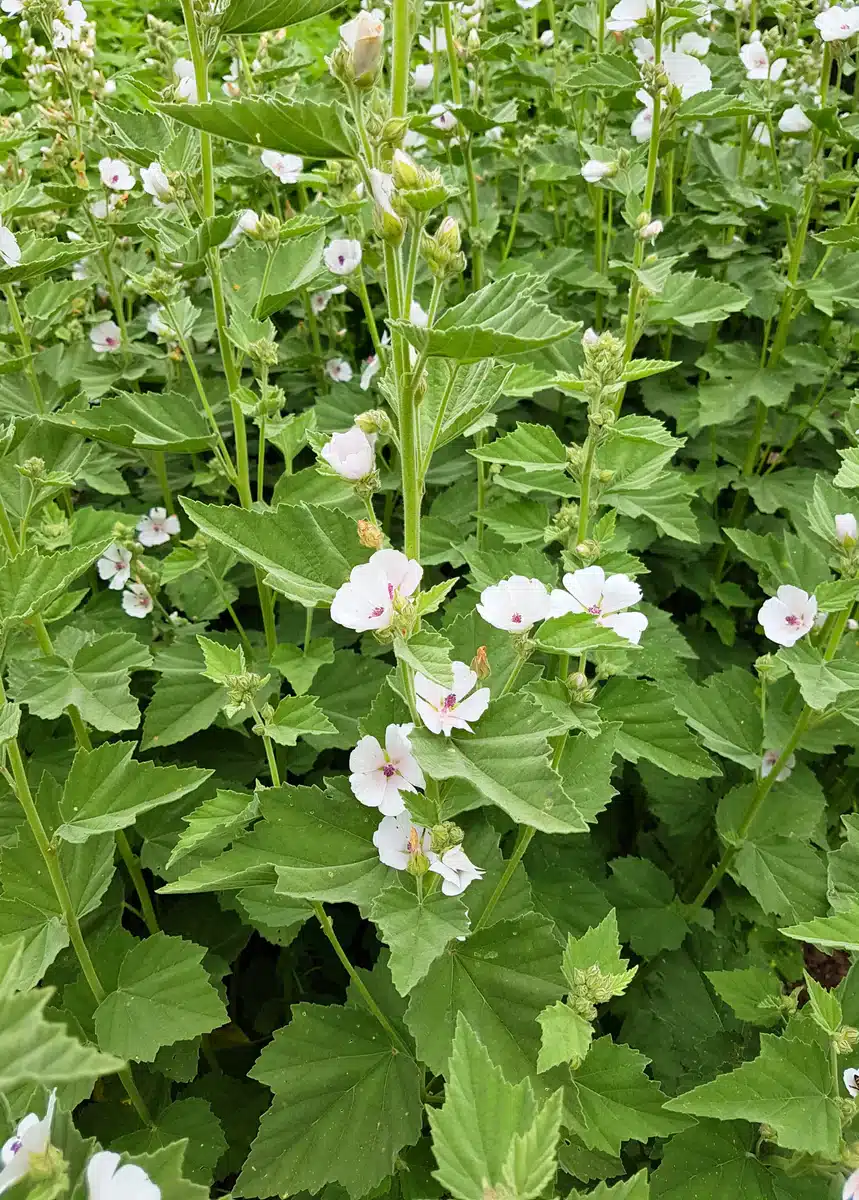
This isn’t the squishy white candy (though its roots did inspire the original confection). Althaea officinalis is the original marshmallow: a graceful, upright perennial with velvety leaves, pale pink blooms, and deep medicinal roots—literally and figuratively.
Marshmallow has been cultivated for centuries as a gentle remedy for the body and a beautiful addition to gardens. It’s deeply grounding, deeply giving, and one of the easiest perennial herbs you can grow.
Edible & Medicinal Uses
Let’s start with its most famous trait—mucilage. Every part of the marshmallow plant, especially the root, contains this slippery, soothing compound. Traditionally used to calm sore throats, dry coughs, and inflamed digestive tracts, marshmallow root is a classic “demulcent” in herbalism. It coats and comforts, making it especially helpful during cold and flu season.
You can use the root dried or fresh—steeped into tea, cooked in food, or blended into syrups and lozenges. The leaves and flowers are also edible and mildly mucilaginous, excellent for soothing teas or as a cooling addition to summer salads.
Beyond human health, marshmallow plays a subtle role in garden health too. Its deep roots help break up compacted soil and draw moisture from below, making it a good companion in polycultures or food forest guilds.
Growing Marshmallow
Marshmallow is a breeze to grow in the right conditions. Native to wet meadows and marshy edges, it prefers rich, moist soil—but it’s surprisingly adaptable once established. It thrives in USDA Zones 3–9 and can handle full sun to part shade, though you’ll get the best flower and root growth with plenty of sunlight.
Plants grow 3–5 feet tall with soft, downy leaves and spikes of hibiscus-like pale pink blooms that attract pollinators from midsummer through fall. The plant dies back in winter and returns reliably each spring, growing stronger year by year.
Harvest leaves and flowers throughout the growing season. Harvest roots in late fall, after the plant has gone dormant, when its energy has returned below ground.