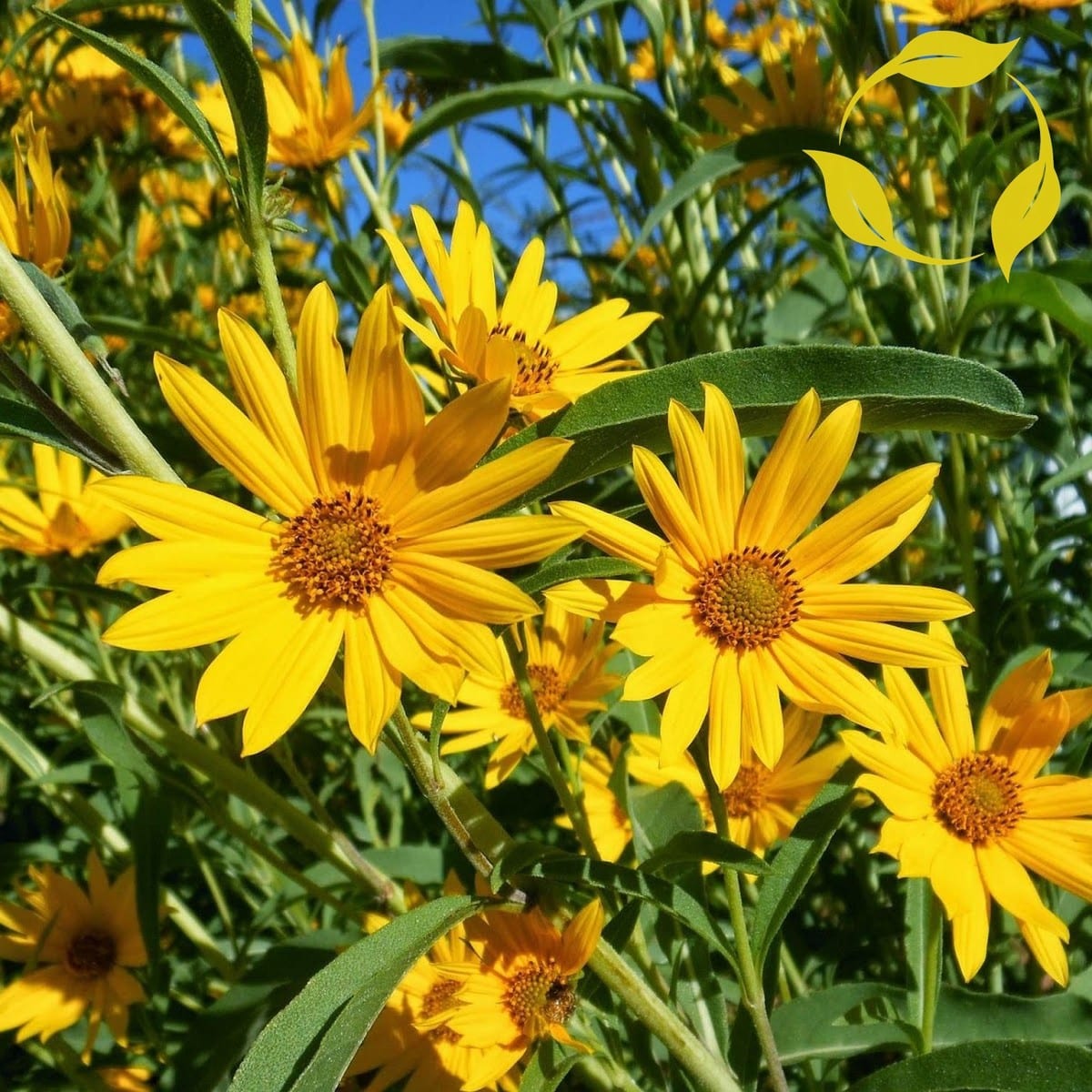
Maximilian Sunflower (Helianthus maximiliani)
A towering perennial with golden blooms, edible shoots, and powerful pollinator appeal—Maximilian Sunflower brings beauty and abundance to your food forest year after year.
Native to the central and western U.S., this sunflower is a long-lived herbaceous perennial and a perfect fit for permaculture systems, pollinator hedgerows, or the sunny edges of a home garden.
Edible & Medicinal Uses
Maximilian sunflower is closely related to the Jerusalem artichoke (Helianthus tuberosus) and, like its cousin, it produces edible tubers (though with lower yields). These starchy roots can be dug in late fall or early spring and eaten raw, roasted, or fermented. They’re sweet, nutty, and full of inulin—a prebiotic fiber that’s great for gut health (though it can be a bit gassy for some folks, especially when raw).
In the spring, the tender young shoots are also edible. Harvested when 6–12 inches tall, they have a mild sunflower flavor and can be chopped into salads or sautéed like asparagus.
Medicinally, inulin-rich plants like Maximilian sunflower support beneficial gut bacteria, which in turn support immune health and digestion. While it’s not a primary herb in modern Western herbalism, it’s a functional food with solid health value.
Ecological Benefits
Maximilian sunflower really shines in its role as an ecosystem supporter. Its tall, sturdy stems provide shelter for birds and beneficial insects. The blooms are pollinator magnets, drawing in native bees, butterflies, and other beneficial bugs in late summer when nectar sources start to dwindle.
It also works beautifully as a living fence, windbreak, or privacy screen. When planted in rows or clusters, it forms a dense wall of foliage and flowers that can reach 6–10 feet tall. The deep, fibrous roots help prevent erosion and build soil health over time.
And because it’s a perennial, you plant it once and enjoy its gifts for years to come.
Growing Maximilian Sunflower
This is an undemanding plant. It thrives in full sun and tolerates a wide range of soils—including clay, sandy loam, and marginal ground. It’s drought-tolerant once established but appreciates a bit of extra moisture during long dry spells.
USDA Zones 3–9 are all suitable for Maximilian sunflower. It dies back to the ground each winter and reemerges with vigor in spring. In ideal conditions, it spreads by rhizomes to form a lovely clump or patch—easy to manage with a bit of digging if needed.
To grow: space plants about 2 feet apart, give them a sunny spot, and prepare to be amazed. No staking needed—their stems are strong and upright.
Cut back in late fall or leave the seed heads for winter bird food. Divide clumps every few years to rejuvenate growth and share with friends.