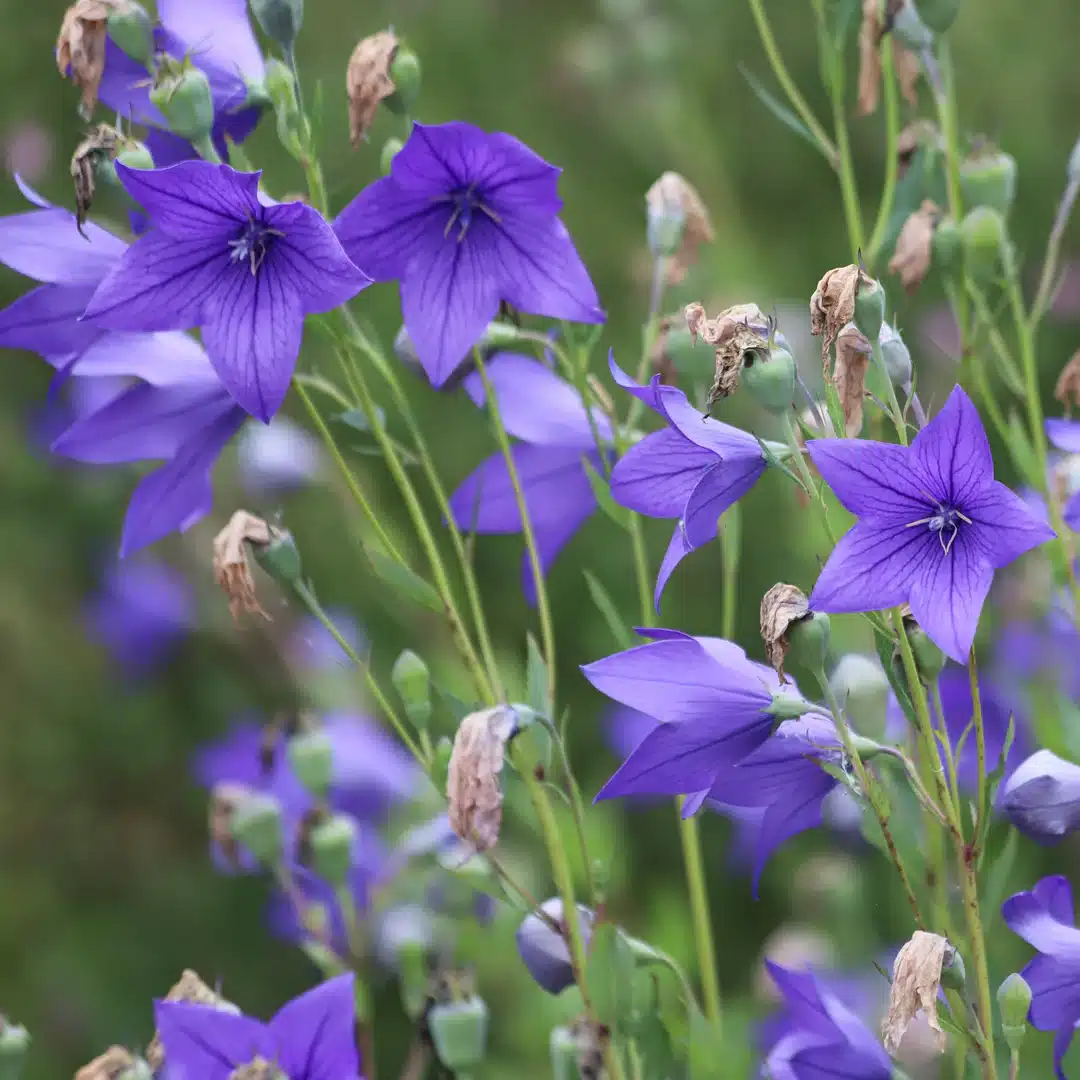
Balloon Flower (Platycodon grandiflorus)
Platycodon grandiflorus has been used for centuries in traditional herbalism, especially in Korean, Chinese, and Japanese medicine. But it’s just as at home in a modern food forest or pollinator garden, where it quietly contributes beauty, biodiversity, and wellness.
Edible & Medicinal Uses
The root of the Balloon Flower—known as 桔梗 (Jie geng) in Chinese medicine—is the true powerhouse of this plant. Traditionally harvested in fall after the plant has matured for two to three years, the roots are known for their expectorant and anti-inflammatory properties. They’re commonly used to soothe sore throats, coughs, and chest congestion, often as part of herbal decoctions or teas.
In Korean cuisine, the root (called doraji) is also eaten as a vegetable—lightly blanched, soaked to reduce bitterness, then stir-fried or pickled. It has a distinctive earthy flavor, somewhat bitter and slightly sweet, and is highly valued as a nutrient-rich wild food.
Above ground, the plant is more ornamental than edible—but pollinators adore the star-shaped blooms, and their long bloom time adds vibrancy to herbal borders and perennial beds.
Growing Balloon Flower
This perennial is a joy to grow—low maintenance, long-lived, and slow to wake up in spring (so don’t assume it’s dead if it lingers underground a while!). It thrives in USDA Zones 3–8 and prefers full sun to light shade. It appreciates well-drained soil with moderate moisture, though it’s relatively drought-tolerant once established.
Give it some space to shine—it tends to stay compact, around 12–24 inches tall, with upright stems that rarely need staking. Deadheading can encourage repeat blooms, but even the seed pods add a sculptural touch once flowering finishes.